
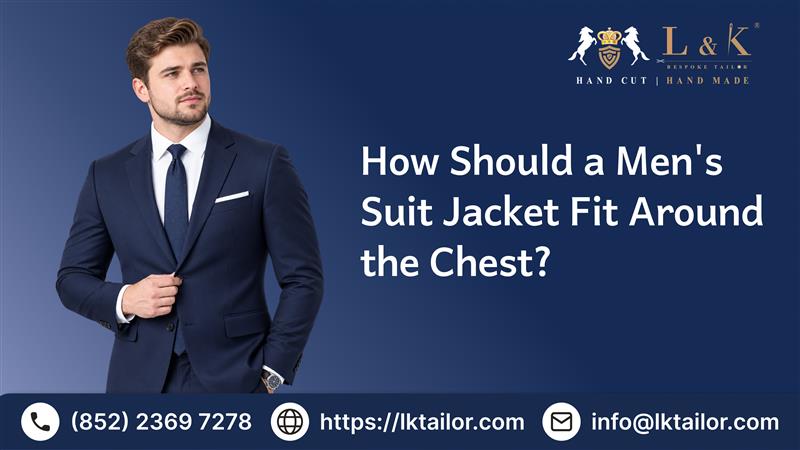
A well-fitted suit jacket should feel comfortable around the chest while maintaining a clean, structured appearance. It should follow the natural shape of your body without squeezing the chest or creating excessive folds and wrinkles.
For most men, the right men’s suit jacket chest fit means the jacket can be buttoned comfortably, the lapels sit naturally, and there is enough room for normal movement without the garment looking loose. However, the ideal fit depends on your body proportions, posture, jacket construction, fabric, and personal preference.
If you are considering a custom garment, bespoke men’s suits can provide a more personalized approach because the jacket can be developed around individual measurements rather than a standard size.
What Does a Properly Fitted Suit Jacket Feel Like Around the Chest?
A properly fitted jacket should follow the contours of your chest without feeling restrictive. The fabric should sit smoothly across the front, and the jacket should maintain its shape whether you are standing, walking, or sitting.
A good suit jacket chest fit should allow you to:
- Button the jacket without excessive pulling
- Breathe and move comfortably
- Move your arms naturally
- Maintain a clean line across the chest
- Keep the lapels lying relatively flat
- Avoid excessive fabric around the torso
The goal is not to make the jacket as tight as possible. A tailored jacket should provide enough ease for movement while preserving the intended silhouette.
How Much Room Should a Men’s Suit Jacket Have in the Chest?
There is no single chest allowance that works for every man.
The amount of room required depends on:
- Chest circumference
- Body shape
- Shoulder width
- Posture
- Jacket construction
- Fabric weight
- Desired fit
- How the jacket will be worn
This is why a standard size cannot always reproduce the fit of a properly tailored garment.
When determining how tight a men’s suit jacket should be, the tailor should consider the relationship between the chest, shoulders, waist, arms, and overall posture.
The jacket should have enough room to move naturally without creating excessive fullness.
7 Signs Your Suit Jacket Is Too Tight Across the Chest
Understanding the signs of an incorrect fit can help you identify whether your jacket needs adjustment.
1. The Button Pulls Across the Chest
One of the clearest signs of a jacket that is too tight is visible tension around the button.
When the jacket is fastened, you may notice fabric pulling outward from the button area. This can create an unwanted X-shaped or horizontal wrinkle.
2. The Lapels Start to Open
If the lapels pull away from the chest when the jacket is buttoned, the garment may not have enough room through the chest.
However, lapel behavior should be considered alongside the shoulders and waist rather than judged independently.
3. Horizontal Wrinkles Appear Across the Chest
Horizontal lines or tension wrinkles across the front of the jacket can indicate that the garment is struggling to accommodate the chest.
These wrinkles can become more noticeable when you button the jacket or move your arms.
4. Arm Movement Feels Restricted
Your suit jacket should allow normal movement.
If reaching forward, shaking hands, sitting down, or moving your arms creates significant tension across the chest, the jacket may be too restrictive.
5. The Fabric Feels Tense When Sitting
A jacket can feel acceptable while standing but become uncomfortable when sitting.
This is an important part of evaluating proper suit jacket chest fit, particularly for professionals who wear suits for long meetings or working days.
6. The Chest Looks Compressed
A very tight jacket can make the chest appear compressed rather than structured.
The fabric may stretch across the torso, reducing the clean appearance that a tailored suit is intended to create.
7. The Jacket Cannot Close Comfortably
If you have to pull the two sides together forcefully to fasten the jacket, the chest measurement may not provide sufficient room.
A suit jacket should close naturally without excessive strain.
7 Signs Your Suit Jacket Is Too Loose Around the Chest
A jacket can also have too much room.
Look for these signs:
1. Excess Fabric Across the Chest
If there is significant loose fabric across the front of the jacket, the chest may be too large for your measurements.
2. The Jacket Looks Baggy When Buttoned
A properly fitted jacket should maintain a clean silhouette when closed. Excess space can make the garment appear oversized.
3. The Lapels Do Not Sit Correctly
Excessive room through the chest can affect how the lapels sit against the body.
4. Excess Fabric Appears Around the Armholes
Extra fabric around the chest and underarm area can indicate that the jacket has too much volume.
5. The Jacket Loses Its Shape
A jacket should follow the body’s proportions. Too much room can remove the structured appearance of the garment.
6. The Button Sits Too Far Away From the Body
When the jacket is fastened, excessive space between the body and the front of the jacket may indicate an overly generous chest measurement.
7. The Chest Looks Disconnected From the Shoulders
The chest should work proportionally with the shoulders and waist. If one area appears noticeably larger, the overall silhouette can look unbalanced.
Does Chest Fit Depend on Shoulder and Waist Fit?
Yes.
One of the biggest mistakes when evaluating a suit is looking at the chest in isolation.
A jacket is a complete structure:
Shoulders → Chest → Waist → Jacket Length
These areas need to work together.
For example, you can have the correct chest measurement but still have a poor overall fit if:
- The shoulders are too wide
- The waist is too tight
- The jacket is too short
- The armhole is restrictive
- The sleeve length is incorrect
This is why professional tailoring considers multiple measurements rather than simply matching a jacket to a chest size.
L & K Bespoke Tailor Hong Kong fitting process specifically considers measurements such as the chest, shoulders, arms, torso and posture when developing a personalized suit.
How Should a Suit Jacket Fit When You Button It?
When buttoned, a well-fitted suit jacket should close comfortably without excessive tension.
You should not see:
- Strong horizontal pulling
- Excessive X-shaped wrinkles
- Significant gaping
- Distorted lapels
- Fabric stretching across the chest
At the same time, the jacket should not have excessive empty space between your chest and the garment.
The correct fit is a balance between comfort, structure, movement and proportion.
The goal should be a jacket that looks natural both buttoned and unbuttoned.
Why Does My Suit Jacket Pull Across the Chest?
A jacket can pull across the chest for several reasons.
The Jacket Is Too Small
The most obvious reason is insufficient chest room.
The Chest Measurement Is Incorrect
If the original measurement was inaccurate, the finished garment may not provide the appropriate amount of ease.
The Shoulder Fit Is Incorrect
Shoulder problems can affect how the jacket hangs across the chest.
The Armhole Is Too Restrictive
A restrictive armhole can make the jacket feel tight even when the chest measurement appears reasonable.
The Pattern Does Not Match the Body Shape
Every body has different proportions. A standard pattern may not accommodate certain chest, shoulder, stomach or posture characteristics as effectively as a personalized pattern.
The Garment Needs Alteration
Some fit problems can be corrected through alterations, depending on the garment’s construction and available seam allowance.
L & K Bespoke Tailor Hong Kong already provides dedicated guidance around suit alterations and professional fitting, making this a useful distinction between simple adjustments and a garment that needs more substantial changes.
How Does Bespoke Tailoring Improve Chest Fit?
One of the main advantages of bespoke tailoring is the ability to build the garment around the individual rather than relying entirely on standardized sizing.
During a bespoke process, the tailor can consider:
- Chest measurement
- Shoulder width
- Posture
- Torso shape
- Arm position
- Waist measurement
- Jacket length
- Personal fit preference
This allows the chest area to be balanced with the rest of the jacket.
L&K tailor’s describes its bespoke approach as using individual body measurements and body-shape considerations to create personalized suits and shirts.
Individual Chest Measurement
The chest measurement provides the foundation for determining the jacket’s overall proportions.
Shoulder and Posture Assessment
Your shoulders and posture affect how the jacket sits across the chest and back.
Custom Pattern Development
A personalized pattern can account for body proportions that may not be addressed by a standard ready-to-wear pattern.
Fittings and Adjustments
Fittings allow the tailor to assess how the garment behaves on the body and make appropriate adjustments.
L & K Bespoke Tailor Hong Kong current fitting guidance describes measurements followed by fabric/design selection and fittings and adjustments as part of the tailoring process.
How Should a Suit Jacket Fit for Long Business Days?
For professionals who wear suits for several hours, comfort becomes particularly important.
A jacket that looks excellent while standing but becomes restrictive after sitting for a meeting may not be properly balanced.
Consider:
- Comfortable chest ease
- Shoulder mobility
- Arm movement
- Breathable fabric
- Comfortable sleeve construction
- Proper jacket length
- Overall body proportions
The best fit is one that continues to feel comfortable throughout the day rather than only looking good for a few minutes in front of a mirror.
Choosing a Suit Jacket for Hong Kong’s Climate
Hong Kong’s warm and humid conditions make comfort an important consideration when selecting a suit.
A well-designed jacket should provide enough room for natural movement while working with an appropriate fabric and construction.
For warm-weather suiting, factors such as:
- Fabric weight
- Breathability
- Natural fibers
- Jacket construction
- Personal comfort
- Intended occasion
can influence the final choice.
L & K Bespoke Tailor Hong Kong tailoring content also discusses fabric selection and fitting with the local climate and individual requirements in mind.
For men who need suits for business, travel, meetings, or formal events, the right combination of fabric and fit can make a significant difference to everyday comfort.
Men’s Suit Jacket Chest Fit Checklist
Before deciding whether a jacket fits correctly, check the following:
✓ The jacket buttons without excessive pulling.
✓ The chest does not show strong horizontal wrinkles.
✓ The lapels sit naturally.
✓ You can breathe comfortably.
✓ You can move your arms naturally.
✓ There is no excessive fabric across the chest.
✓ The chest is proportionate to the shoulders.
✓ The jacket maintains its shape when moving.
✓ The jacket remains comfortable when sitting.
If several of these points are not met, a professional fitting or alteration assessment may be worthwhile.
Frequently Asked Questions
How should a men’s suit jacket fit around the chest?
A men’s suit jacket should follow the chest without squeezing it or hanging excessively loose. When buttoned, it should close comfortably, maintain a clean front, and allow natural movement without significant pulling or wrinkles.
How tight should a suit jacket be around the chest?
A suit jacket should be comfortably close to the body while allowing enough ease for breathing and movement. It should not create strong fabric tension when buttoned or restrict normal arm movement.
How do I know if my suit jacket is too tight?
Common signs include pulling around the button, horizontal wrinkles across the chest, lapels opening away from the body, restricted movement, and discomfort when sitting or moving.
Why does my suit jacket pull across my chest?
A jacket may pull because it is too small, the chest measurement is incorrect, the shoulders or armholes are restrictive, or the pattern does not accommodate your body proportions.
Should there be room between my chest and suit jacket?
Yes. A suit jacket needs some ease between the body and garment so that you can breathe and move comfortably. The exact amount depends on your body shape, fabric, construction and preferred fit.
Can a tailor make a suit jacket bigger in the chest?
Sometimes. Whether a jacket can be enlarged depends on its construction and the amount of seam allowance available. A tailor should inspect the garment before determining whether the chest can be adjusted.
Is a tight suit jacket better than a loose suit jacket?
Neither is automatically better. A good suit jacket should balance structure and comfort. It should follow your body without squeezing the chest or creating excessive empty space.
Final Thoughts: The Right Chest Fit Should Feel Structured, Not Restrictive
The best men’s suit jacket chest fit is not about wearing the smallest possible size. It is about creating the right balance between comfort, structure and proportion.
A properly fitted jacket should:
- Follow the chest naturally
- Button without excessive tension
- Allow comfortable movement
- Maintain clean lapels
- Work proportionally with the shoulders and waist
- Remain comfortable while sitting and standing
For men who want a suit developed around their individual proportions rather than adjusted from a standard size, bespoke suit tailoring offers a more personalized approach to measurements, construction and fitting.
L & K Best Custom Tailor Hong Kong process considers individual body measurements and fitting requirements when developing personalized garments.
If you’re looking for a suit that is designed around your measurements, explore L & K Bespoke Tailor Hong Kong or arrange a fitting consultation to discuss your requirements.