
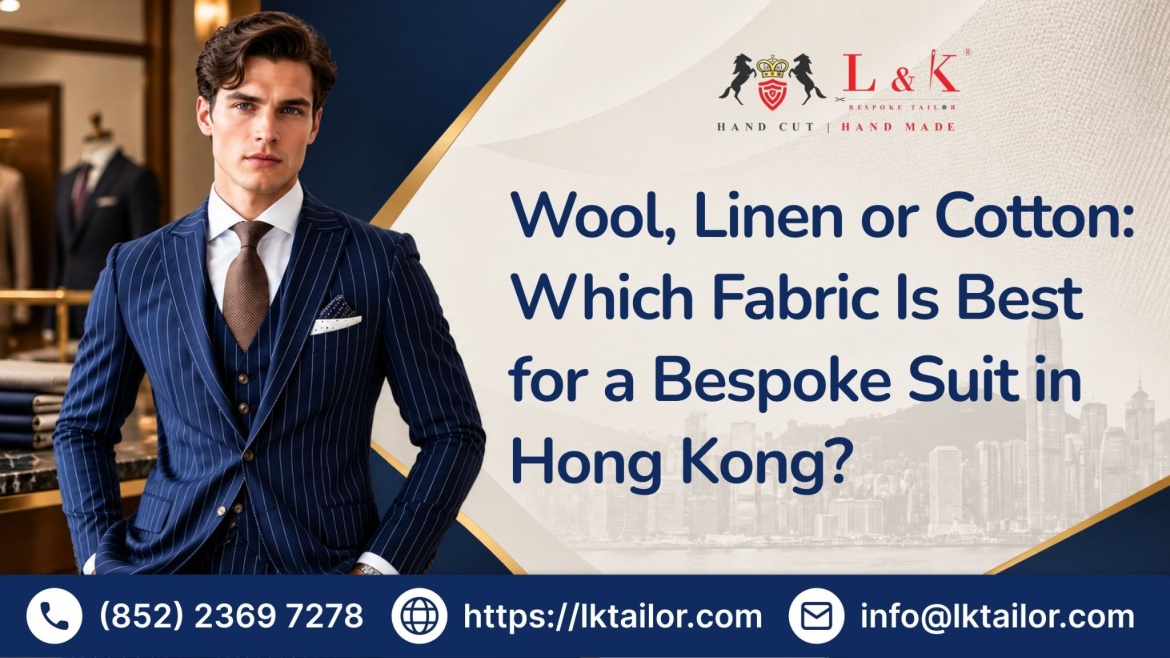
Choosing the right fabric is one of the most important decisions when ordering a bespoke suit. Hong Kong’s warm, humid summers, air-conditioned offices and formal business settings make fabric selection especially important. The best fabric for bespoke suits in Hong Kong depends on how often you wear your suit, the level of formality you need, your comfort preferences and how much maintenance you are willing to manage. Wool, linen and cotton each offer distinct advantages, so understanding their differences can help you make a confident choice.
What Is the Best Fabric for a Bespoke Suit in Hong Kong?
For many professionals, lightweight wool is a versatile starting point because it offers a balance of breathability, structure, drape and wrinkle recovery. Linen is an excellent option for relaxed summer tailoring, while cotton suits provide a more casual appearance with a naturally crisp texture.
The best suit fabric for Hong Kong weather ultimately depends on your lifestyle. If you regularly attend business meetings, lightweight wool may be the most practical choice. For outdoor events and warm-weather occasions, linen can offer greater airflow. Cotton is worth considering when you prefer a less formal look.
1. Wool: A Versatile Choice for Business Suits
Wool remains a popular choice for tailored business clothing because it can maintain a polished appearance while providing comfort across different settings.
Why Choose Wool for a Bespoke Suit?
Lightweight wool can help regulate comfort, while its natural resilience allows the fabric to recover from creases better than linen or many cotton fabrics. It also drapes well, helping a tailored jacket maintain its shape.
For professionals looking for wool suit fabric in Hong Kong, lightweight wool and tropical wool are worth considering. Tropical wool is generally woven to encourage airflow and can be suitable for warm climates, although comfort also depends on the weave, fabric weight, lining and overall construction.
Key advantages of wool include:
- A polished appearance for business and formal occasions.
- Good drape and shape retention.
- Better wrinkle recovery than many linen and cotton options.
- Versatility for regular office wear and professional events.
Is Tropical Wool Suitable for Hong Kong Weather?
Yes, lightweight tropical wool can be a practical choice for Hong Kong’s warm climate. Its open weave can encourage airflow without sacrificing the structured appearance many professionals want from a suit.
When selecting tropical wool suits, consider the fabric’s weight, weave and lining rather than relying on the name alone. A lighter, breathable construction may feel more comfortable in humid conditions than a heavy, tightly woven fabric.
Wool is particularly suitable for business meetings, formal dinners and occasions where a refined silhouette matters.
2. Linen: A Breathable Option for Summer Tailoring
Linen is made from flax fibres and is well known for its airy feel and relaxed appearance. It is a strong option for people who want lightweight suit fabrics for men, particularly for warm-weather events.
Why Choose Linen for a Bespoke Suit?
Linen allows air to circulate through many of its weaves, making it appealing during hot weather. Its natural texture also creates a relaxed, sophisticated appearance that works well for summer celebrations, destination weddings and smart-casual occasions.
The main advantages of linen include:
- Excellent airflow in suitable lightweight weaves.
- A relaxed appearance that suits summer styling.
- A distinctive natural texture.
- Comfortable options for outdoor events and warm-weather travel.
However, linen wrinkles more readily than wool. These creases are part of its characteristic appearance, but they may not suit professionals who need a consistently sharp finish throughout a busy working day.
For customers considering linen suits in Hong Kong, a linen blend may offer a useful compromise. Blends can balance linen’s texture with other fibres’ properties, depending on their composition.
3. Cotton: Smart, Structured and Relaxed
Cotton suits occupy a useful middle ground between formal business tailoring and casual clothing. Cotton generally offers a matte finish and a slightly more relaxed look than traditional business-suit wool.
When Is Cotton a Good Choice?
A cotton suit can be suitable for creative workplaces, daytime gatherings and occasions where a structured outfit is desirable without looking overly formal.
If you prefer cotton suit fabric, consider these benefits:
- A clean, natural-looking finish.
- A versatile style for smart-casual outfits.
- A range of textures and fabric weights.
- Good compatibility with less formal shirts and accessories.
Cotton can crease more readily than wool and may feel heavier or less airy than an appropriate lightweight linen or open-weave wool. Its comfort depends on the fabric construction, weight and fit.
For a more formal business wardrobe, wool may be easier to maintain. For relaxed tailoring, cotton can be an excellent alternative.
4. Wool vs Linen vs Cotton Suits: Which Should You Choose?
The best option depends on your priorities rather than a single universal rule.
| Feature | Lightweight wool | Linen | Cotton |
| Breathability | Good; varies by weave | Often excellent | Varies by weight and weave |
| Wrinkle resistance | Generally best of the three | Wrinkles readily | Moderate to low, depending on construction |
| Appearance | Polished and structured | Relaxed and textured | Crisp and casual |
| Business meetings | Excellent choice | Best for relaxed settings | Suitable for some business-casual settings |
| Summer occasions | Lightweight weaves work well | Excellent for relaxed summer wear | Good in suitable lightweight fabrics |
| Maintenance | Usually easier to keep sharp | Requires accepting natural creases | May need more pressing |
| Overall versatility | High | Best for relaxed warm-weather styling | High for smart-casual use |
This comparison explains why wool vs linen vs cotton suits is not simply a question of which fabric is coolest. The right decision also depends on the level of formality, the amount of structure you need and how you want your suit to look throughout the day.
5. Which Suit Fabric Is Best for Everyday Office Wear?
For everyday office wear, lightweight wool is often a sensible first option because it combines a professional appearance with useful wrinkle recovery and versatility.
When choosing breathable fabric for business suits, consider the following:
- Frequent meetings: Choose a lightweight wool with enough structure to maintain a polished silhouette.
- Hot-weather commuting: Look for breathable weaves and lighter construction.
- Creative or business-casual workplaces: Cotton or linen may suit a more relaxed dress code.
- Formal evening events: A refined wool fabric can provide a more traditional appearance.
Remember that Hong Kong offices can be heavily air-conditioned. Your ideal fabric should work both outdoors and indoors, rather than focusing exclusively on outdoor temperatures.
6. How Do You Choose the Right Fabric for a Custom Suit?
Choosing the right fabric involves more than comparing fibre types. Your tailor can help you evaluate the fabric’s weight, weave, texture, drape and intended use.
Before choosing your bespoke suit fabric selection, ask yourself these questions:
- Where will you wear the suit? Daily business wear may require a different fabric from a summer wedding suit.
- How formal should it look? Smooth wool generally creates a more traditional business appearance, while linen offers a relaxed finish.
- How much maintenance can you manage? Consider how the fabric responds to creases and pressing.
- What is your preferred fit? Fabric drape and structure influence how the jacket and trousers sit on your body.
- Will you wear it year-round? A versatile lightweight wool may suit more situations than a distinctly seasonal fabric.
An experienced tailor can also explain how lining, construction and the amount of layering affect comfort. These details matter because even a breathable fabric can feel uncomfortable if the suit is too heavy or poorly suited to its intended use.
At L & K Tailor, customers exploring bespoke tailoring can discuss their preferred style, intended occasions and fabric requirements before choosing a suitable suit.
Frequently Asked Questions
What is the best fabric for a bespoke suit in Hong Kong?
Lightweight wool is a versatile choice for many business and formal settings because of its drape, structure and wrinkle recovery. Linen is well suited to relaxed summer occasions, while cotton works well for smart-casual tailoring.
Which suit fabric is best for Hong Kong’s humid weather?
Lightweight, breathable fabrics are worth prioritising. Linen and suitable open-weave wool can both work well, but the final result depends on fabric weight, construction, lining and fit.
Is wool, linen or cotton better for a men’s suit?
Wool is generally the most versatile for business wear, linen is ideal for relaxed warm-weather styling, and cotton suits are suitable for smart-casual occasions. Your intended use should guide the choice.
What is the best lightweight fabric for a business suit?
Lightweight wool is a strong option for a professional appearance and useful wrinkle recovery. An open weave can improve airflow, making it worth considering for warm climates.
Is tropical wool suitable for Hong Kong weather?
Yes. Tropical wool is designed in weaves that can encourage airflow and can be suitable for warm conditions. Fabric weight, lining and construction still influence how comfortable the finished suit feels.
Which suit fabric is best for everyday office wear?
For many professionals, lightweight wool offers a useful balance of comfort, structure and versatility. Cotton or linen may be suitable when the workplace has a more relaxed dress code.
What is the difference between wool and linen suits?
Wool generally drapes more smoothly and recovers from wrinkles more effectively. Linen is known for its airy feel and natural texture but creases more readily.
Final Thoughts
The best fabric for bespoke suits in Hong Kong depends on how you plan to wear your suit. Lightweight wool is a versatile choice for business and formal occasions, linen offers a relaxed option for warm-weather events, and cotton provides a smart-casual alternative.
Rather than choosing a fabric based on fibre alone, consider its weight, weave, lining, construction and the occasions for which you need the suit. The right combination will help you achieve a comfortable fit and a style that suits your professional and personal needs.
Explore L & K Tailor’s bespoke suits in Hong Kong to learn more about tailored options for your wardrobe.