
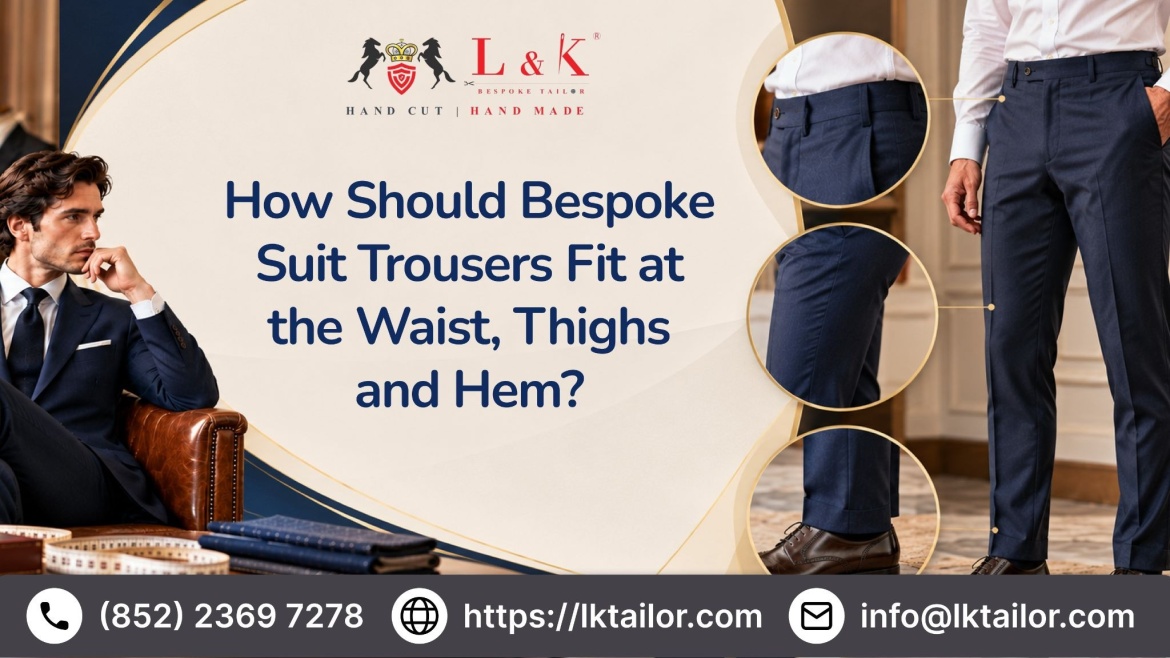
A well-fitted pair of suit trousers should feel comfortable when standing, sitting and walking while maintaining a clean, balanced silhouette. The waist should stay in place without a tight belt, the seat and thighs should allow natural movement, and the hem should complement your shoes without excessive fabric bunching. Understanding how bespoke suit trousers should fit helps you recognise the difference between trousers that simply fit and trousers that are carefully tailored to your proportions.
For professionals who wear suits regularly, the right trouser fit is essential for both comfort and appearance. Whether you are preparing for business meetings, formal occasions or everyday office wear, understanding the key fitting points can help you make better tailoring decisions.
What Is the Ideal Fit for Bespoke Suit Trousers?
The ideal bespoke suit trouser fit combines comfort, proportion and a clean drape. Trousers should sit securely at the waist, lie smoothly across the seat, provide enough room through the thighs and fall naturally towards the shoes.
A good fit should allow you to move without pulling, pinching or excessive fabric folds. The exact silhouette can be slim, straight or relaxed, depending on your body shape and personal preference.
When evaluating a pair of tailored trousers, pay attention to six areas:
- Waistband position and comfort.
- Seat fit and fabric tension.
- Room through the thighs.
- Knee shape and leg taper.
- Leg opening and overall proportion.
- Hem length and trouser break.
Each area contributes to the overall appearance of the trousers. A problem at one point can affect how the entire garment hangs.
1. How Should Suit Trousers Fit Around the Waist?
The waistband should sit securely at your natural waist or at the intended rise of the trousers. It should remain in place without digging into your skin, creating deep pressure marks or requiring a tightly fastened belt.
A good suit trouser waist fit should feel secure when you stand and remain comfortable when you sit down. You should not need to pull the waistband up repeatedly, and the front closure should lie flat without visible strain.
Signs of a Good Waist Fit
- The waistband stays in position during normal movement.
- The fastening closes comfortably without pulling.
- The fabric does not bunch excessively around the waistband.
- You can sit down without uncomfortable pressure on your abdomen.
If the waistband gaps at the back, the trousers may need adjustment. If it feels tight when sitting or creates horizontal pulling lines, the waist or rise may need attention.
The goal is not to make the waistband as tight as possible. It is to achieve a secure fit that works with your posture and movement.
2. How Should Bespoke Suit Trousers Fit Around the Seat?
The seat refers to the area around the hips and buttocks. This part of the trousers should follow your natural shape without pulling tightly or hanging excessively loose.
A properly tailored seat creates a smooth appearance from the waist through the upper thighs. Too little room can cause tension lines across the seat, while too much fabric may create sagging or folds beneath the buttocks.
When assessing bespoke suit measurements, the seat should be evaluated alongside the rise and thigh width. These measurements work together, so changing one area may affect the drape of another.
A tailor can adjust the pattern to improve balance while maintaining the intended silhouette. The objective is to create enough room for comfortable movement without unnecessary bulk.
3. How Much Room Should Suit Trousers Have in the Thighs?
Suit trousers should provide enough room through the thighs for walking, sitting and climbing stairs without pulling against your legs. At the same time, the fabric should not hang excessively or create an unnecessarily wide silhouette.
The right trouser thigh fit depends on your body proportions, fabric and preferred style. Slim-fit trousers have less ease than straight or relaxed styles, but all should allow comfortable movement.
How to Check the Thigh Fit
- Stand naturally and check whether the fabric falls smoothly.
- Walk a few steps to see whether the trousers restrict your movement.
- Sit down and check for excessive tension across the thighs.
- Look for strong horizontal creases that may indicate insufficient room.
If the fabric pulls tightly when you sit, the thigh width or rise may need adjustment. If excess material gathers around the upper legs, the cut may be too generous for your preferred style.
A well-designed pair of custom suit trousers in Hong Kong should balance the desired silhouette with the practical needs of your daily routine.
4. Should Bespoke Suit Trousers Have a Slim or Relaxed Fit?
Neither slim nor relaxed trousers are automatically better. The right choice depends on your proportions, comfort requirements, wardrobe and the style of the suit.
| Fit style | Appearance | Best suited for |
| Slim fit | Narrower through the leg | Those who prefer a contemporary silhouette |
| Straight fit | Balanced width from thigh towards hem | Classic business and formal wear |
| Relaxed fit | More room through the seat and thighs | Comfort-focused or traditional styling |
| Tapered fit | More room at the thigh with a narrower hem | Modern styling with a defined leg shape |
A slim fit should never restrict walking or sitting. Similarly, a relaxed fit should still maintain a deliberate shape rather than appearing oversized.
When choosing men’s formal trouser fit, consider how the trousers work with your jacket. The overall silhouette should look balanced, whether you prefer a narrow leg or a more traditional cut.
5. How Should the Knees and Leg Opening Fit?
The knee and lower leg help determine how the trousers fall towards the shoes. A suitable cut should follow the intended silhouette without twisting, clinging or creating excessive folds.
The knee width should provide enough space for comfortable movement. The leg opening should complement the trouser cut, shoe style and overall proportions of the suit.
For example, a tapered trouser may have a narrower opening than a traditional straight-leg design. Neither is inherently better; the important factor is whether the proportions look balanced.
During a fitting, check that the trousers hang naturally when standing and do not twist around your legs as you walk. Fabric weight and construction can also affect how the lower leg drapes.
6. Where Should Tailored Suit Trousers End?
The correct tailored trouser hem length depends on your style preference, shoe choice and the shape of the trousers. The hem should create a deliberate finish rather than dragging on the ground or bunching excessively over the shoes.
One of the most common ways to describe trouser length is the trouser break. This refers to how much the fabric folds where the trouser hem meets the shoe.
What Is the Ideal Trouser Break for a Business Suit?
The ideal trouser break for suits depends on the look you want to achieve.
- No break: The trousers meet the shoe with little or no fold, creating a clean, contemporary appearance.
- Slight break: A small fold appears at the front, offering a versatile option for business wear.
- Full break: More fabric rests against the shoe, creating a traditional appearance when the length and cut are appropriate.
For many business wardrobes, no break or a slight break can create a neat finish. Traditional suit styles may suit a fuller break, depending on the trouser width and overall design.
The hem should also work with the shoes you intend to wear. Trousers that look balanced with formal leather shoes may fall differently with bulkier footwear.
7. How Tight Should Suit Trousers Feel When Sitting?
Suit trousers should remain comfortable when sitting. The waistband should not dig into your abdomen, the seat should not pull excessively, and the thighs should allow you to bend your knees naturally.
If your trousers feel comfortable while standing but become restrictive when sitting, the issue may involve the rise, waistband, seat or thigh width.
When testing the fit, sit in a normal position and check for:
- Excessive pressure around the waist.
- Strong pulling lines across the seat.
- Tightness through the thighs.
- A waistband that shifts or rolls uncomfortably.
These checks are particularly useful when evaluating bespoke trousers in Hong Kong, where a carefully adjusted fit can make regular business wear more comfortable.
A good fitting should consider movement as well as appearance. Trousers that look perfect in a standing photograph may still require adjustment if they restrict everyday activities.
8. What Is the Difference Between Bespoke and Ready-Made Trousers?
Ready-made trousers are manufactured using standardised sizing and patterns. Bespoke trousers are developed around an individual’s measurements, design preferences and fitting requirements.
The difference is not simply whether a garment is expensive. It also involves how the pattern is created, how the garment is fitted and how much personalisation is available.
Key differences include:
- Pattern and measurements: Bespoke tailoring can account for individual proportions and asymmetries.
- Design choices: Waistband details, pleats, pockets, leg shape and hem finishes can be selected according to preference.
- Fitting process: Depending on the tailor’s process, fittings can help refine balance and comfort.
- Personalisation: The finished trousers can be designed around the customer’s preferred silhouette and intended use.
For customers comparing ready-made and bespoke options, the main benefit of bespoke tailoring is the opportunity to create a garment around specific measurements and preferences. The result still depends on the quality of the pattern, construction and fitting process.
9. How Are Bespoke Suit Trousers Measured?
A tailor typically considers the waist, seat, rise, thigh, knee, inseam, outseam and hem width when preparing bespoke trousers. The precise measurements and fitting process vary according to the tailor and the design.
Measurements alone do not determine the final fit. The tailor also needs to consider posture, body proportions, fabric behaviour, shoe choice and the intended silhouette.
During a consultation, it is useful to explain how you plan to wear the trousers. Daily office wear, formal events and occasional use may call for different levels of structure and ease.
If you are exploring custom suit trousers in Hong Kong, discussing these preferences before the garment is made can help establish a clear direction for the design.
At L & K Tailor, customers can explore bespoke suit options and discuss the fit, fabric and styling details that suit their wardrobe.
Frequently Asked Questions
How should bespoke suit trousers fit?
They should sit securely at the waist, follow the seat without pulling, allow comfortable room through the thighs and fall naturally towards the shoes. The fit should remain comfortable when standing, walking and sitting.
How should suit trousers fit around the waist?
The waistband should remain in place without digging into your skin or requiring a tight belt. The front closure should lie flat, and the trousers should remain comfortable when sitting.
How much room should suit trousers have in the thighs?
There should be enough room to walk, sit and bend your knees without excessive tension. The exact amount depends on your body proportions and whether you prefer a slim, straight or relaxed fit.
Where should tailored suit trousers end?
The hem should meet the shoe in a way that complements the trouser cut and intended style. A clean no-break or slight-break finish is common in contemporary business wear, while a fuller break creates a more traditional appearance.
What is the ideal trouser break for a business suit?
A slight break is a versatile choice for many business suits. No break offers a cleaner, more contemporary look, while a full break can suit traditional styling and wider trouser cuts.
Should bespoke suit trousers have a slim or relaxed fit?
Choose a fit that balances appearance and movement. Slim trousers create a narrower silhouette, while straight and relaxed cuts provide more room. None should restrict normal activities.
What is the difference between bespoke and ready-made trousers?
Ready-made trousers use standard sizing, while bespoke trousers are developed around individual measurements and design preferences. The level of fitting and personalisation depends on the tailoring service.
How are bespoke suit trousers measured?
Measurements commonly include the waist, seat, rise, thigh, knee, inseam, outseam and hem width. A tailor also considers posture, fabric and preferred fit when developing the garment.
Final Thoughts
Understanding how bespoke suit trousers should fit can help you make better decisions about comfort, appearance and tailoring. The waist should stay secure, the seat and thighs should allow natural movement, and the hem should complement your shoes and the overall suit silhouette.
The ideal fit is not necessarily the slimmest or most closely fitted option. It is the one that suits your proportions, feels comfortable throughout the day and creates a balanced appearance.
Explore L & K Tailor’s bespoke suits in Hong Kong to learn more about tailored options for your professional and formal wardrobe.