
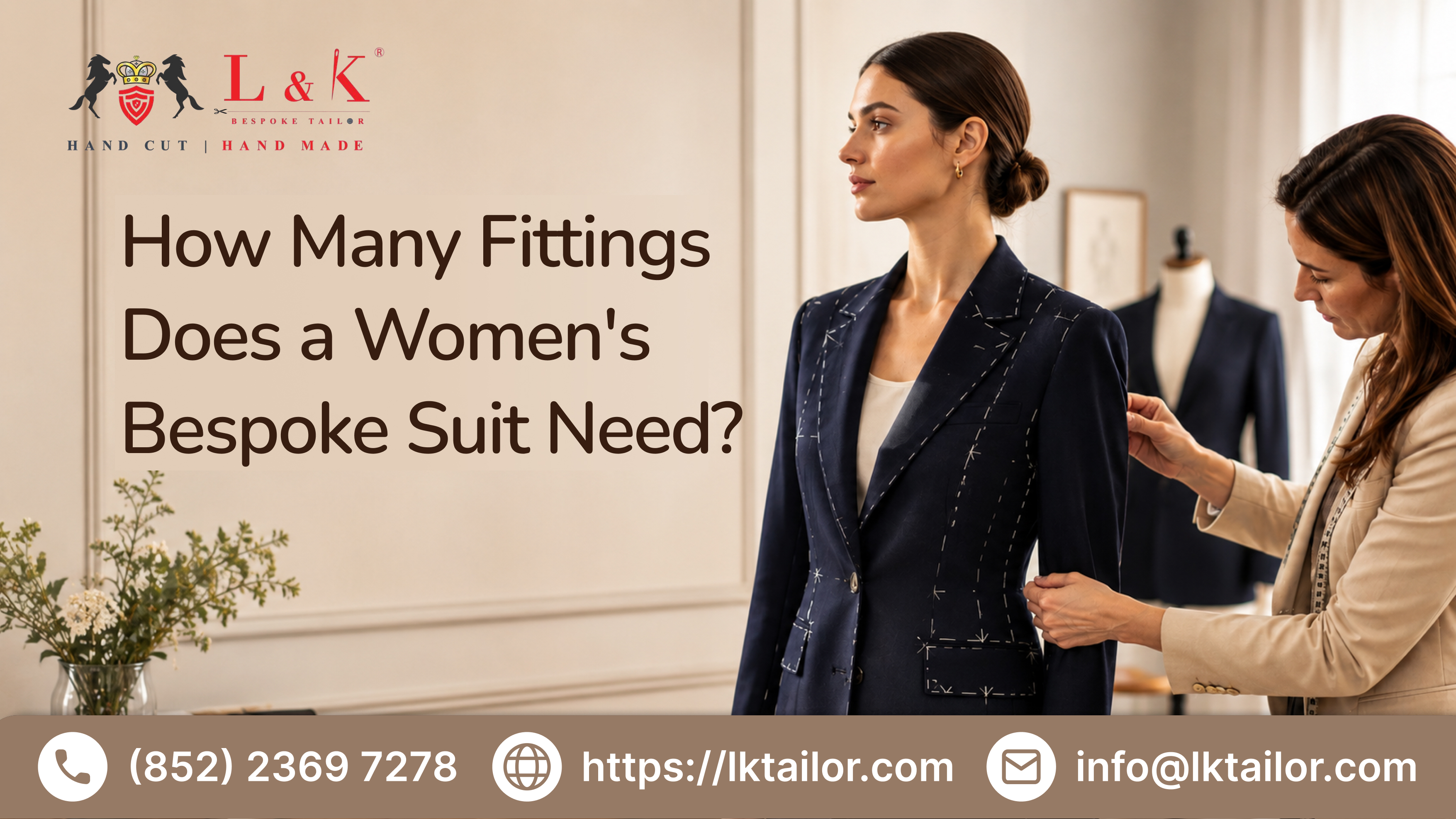
A women’s bespoke suit is created around an individual’s measurements, proportions, posture, and style preferences rather than being selected from standard sizing. One of the most important parts of this process is the fitting. So, how many fittings does a women’s bespoke suit need? There is no single number that applies to every woman. The number can vary depending on the suit design, construction, fabric, body proportions, and adjustments required. A typical bespoke process may involve an initial consultation and measurements followed by one or more fittings before the final garment is completed.
The purpose of these fittings is simple: to make sure the finished suit fits comfortably, looks balanced, and reflects the wearer’s individual preferences.
How Many Fittings Does a Women’s Bespoke Suit Need?
The women’s bespoke suit fitting process usually involves several stages rather than one single fitting.
A typical process can include:
Consultation → Measurements → Pattern Development → First Fitting → Adjustments → Final Fitting → Completion
The exact number of fittings for a bespoke suit can change from person to person.
Factors that can influence the number of fittings include:
- Suit style and construction
- Body proportions
- Fabric selection
- Jacket design
- Trouser or skirt design
- Desired level of customization
- Adjustments identified during fittings
- Individual fit preferences
This is one of the key differences between bespoke tailoring and buying a standard-size suit.
Why Do Women’s Bespoke Suits Need Multiple Fittings?
A bespoke garment is developed around the individual rather than a fixed standard size. This means the tailor needs to evaluate how the garment actually sits on the body during the construction process.
Individual Body Measurements
Women’s custom suit measurements can include the bust, waist, hips, shoulders, sleeve length, jacket length, and other measurements needed for the garment.
Measurements provide the foundation, but they are only one part of achieving the final fit.
Body Shape and Proportions
Every woman has different proportions. Two people with the same bust measurement may have different shoulder widths, torso lengths, waist positions, or hip proportions.
A bespoke women’s suit fitting allows these differences to be considered during construction.
Posture and Movement
Posture can influence how a jacket hangs across the shoulders, back, and chest.
The tailor may also evaluate how the garment behaves when you:
- Stand naturally
- Move your arms
- Sit down
- Walk
- Reach forward
A suit should not only look good when standing still. It should also work with normal movement.
Personal Fit Preference
Some women prefer a more structured silhouette, while others prefer a softer or more relaxed fit.
The women’s bespoke tailoring process allows these preferences to be discussed and incorporated into the garment.
What Happens During the First Women’s Bespoke Suit Fitting?
The first fitting is an important stage of the bespoke suit fitting process for women. Rather than simply checking whether the garment is the right size, the tailor evaluates how different parts of the garment work together.
Shoulder Fit
The shoulders should sit naturally without excessive tension or unnecessary overhang.
Bust and Chest Fit
The fabric should sit smoothly without excessive pulling or unwanted fullness.
Waist Shape
The jacket should create the intended silhouette while remaining comfortable.
Jacket Length
The tailor can evaluate whether the jacket length works with the wearer’s proportions and the intended style.
Sleeve Length
Sleeves should be assessed in relation to the arms and overall jacket proportions.
Trouser or Skirt Fit
If the suit includes trousers or a skirt, the waist, hips, rise, length, and overall shape can also be assessed.
Required Adjustments
The tailor identifies areas that may need refinement before the garment moves toward completion.
What Happens During the Final Fitting?
The final fitting is used to assess the completed or nearly completed garment. At this stage, the tailor can evaluate the overall result, including:
- Shoulder balance
- Bust and chest fit
- Waist shaping
- Hip fit
- Sleeve length
- Trouser or skirt length
- Jacket length
- Overall silhouette
- Comfort and movement
The goal is to make sure the garment works as a complete outfit rather than judging individual measurements separately. A successful women’s suit tailoring process should result in a garment that feels comfortable while maintaining the desired shape and proportions.
What Measurements Are Taken for a Women’s Bespoke Suit?
The exact measurements depend on the garment and tailoring process, but a women’s bespoke suit may require measurements such as:
- Bust
- Natural waist
- Hips
- Shoulder width
- Back length
- Jacket length
- Sleeve length
- Arm circumference
- Trouser waist
- Trouser hip
- Trouser inseam
- Rise
Measurements should be considered together rather than individually.
For example, jacket length may need to be considered alongside shoulder width and torso proportions, while trouser length can depend on the design and footwear.
Can the Number of Fittings Change for Each Woman?
Yes. The number of fittings can vary. There is no universal rule that every women’s bespoke suit requires exactly the same number of fittings.
The process can be influenced by:
- Body proportions
- Suit construction
- Garment design
- Fabric
- Level of customization
- Required alterations
- Personal fit preferences
A relatively straightforward design may require a different process from a highly structured or extensively customized suit. The important point is that fittings should be used to refine the garment rather than rushing to a predetermined number.
Why Is Women’s Bespoke Tailoring Different From Buying a Standard Suit?
Ready-to-wear suits are produced according to standardized sizing. While alterations can improve the fit, the garment was not originally created around one individual’s measurements.
With women’s bespoke tailoring, the process begins with the individual.
| Ready-to-Wear Suit | Women’s Bespoke Suit |
| Standard sizing | Individual measurements |
| Fixed proportions | Personalized proportions |
| Limited design options | Greater customization |
| Basic alterations | Fitting and refinement |
| Designed for a size range | Designed around the individual |
This does not mean every woman needs a bespoke suit. However, bespoke tailoring can be particularly useful when standard sizing does not provide the desired combination of fit, comfort, and style.
How Long Does a Women’s Bespoke Suit Take to Make?
The timeline for a women’s bespoke suit can vary depending on the tailor, fabric availability, construction, design, fitting schedule, and required adjustments.
The process generally involves several stages:
Consultation → Fabric Selection → Measurements → Pattern Development → Construction → Fitting → Adjustments → Final Garment
Because fittings and adjustments are part of the process, bespoke tailoring should not be treated like purchasing an off-the-rack suit. If you have a specific deadline for a business event, wedding, travel, or formal occasion, discuss the timeline with your tailor before starting the process.
What Should You Wear to a Bespoke Suit Fitting?
Choosing appropriate clothing for a fitting can help the tailor evaluate the garment more accurately.
Consider wearing:
- Similar undergarments to those you normally wear
- A suitable top or shirt
- Similar shoes if trouser or skirt length is being assessed
- Clothing that does not add unnecessary bulk
For example, if the finished suit will normally be worn with dress shoes, bringing similar footwear can help when assessing trouser length. The goal is to recreate the conditions in which you will actually wear the garment.
How Should a Women’s Bespoke Suit Feel After the Final Fitting?
A well-fitted suit should balance comfort, structure, movement, and appearance. You should be able to move naturally without unnecessary restriction.
Look for:
- Comfortable shoulders
- Smooth fabric across the bust
- A clean waist shape
- Appropriate sleeve length
- Comfortable trousers or skirt
- Balanced jacket proportions
- Natural movement
The suit should feel like it was designed for your body rather than forcing your body to adapt to a standard shape.
Is a Bespoke Suit Fitting Worth It for Women?
For women who want a garment designed around their individual measurements and preferences, the fitting process is one of the main advantages of bespoke tailoring.
Instead of simply choosing the closest standard size, the process allows the tailor to consider:
- Individual measurements
- Body proportions
- Posture
- Preferred silhouette
- Fabric
- Lifestyle
- Intended occasion
This can be particularly useful when you have specific requirements that are difficult to achieve with standard sizing.
The goal is not simply to create a smaller or larger version of an existing suit. It is to create a garment that works with the individual’s proportions and preferences.
Frequently Asked Questions
How many fittings does a women’s bespoke suit need?
The number varies depending on the garment, construction, body proportions, design, and adjustments required. A bespoke suit generally involves an initial consultation and measurements followed by fitting and adjustment stages before the final garment is completed.
What happens during a women’s bespoke suit fitting?
During a fitting, the tailor evaluates how the garment sits on the body. Areas such as the shoulders, bust, waist, hips, sleeves, jacket length, and trouser or skirt fit may be assessed before adjustments are made.
What measurements are taken for a women’s bespoke suit?
Measurements can include the bust, waist, hips, shoulders, sleeve length, jacket length, trouser measurements, and other dimensions needed for the garment. The exact measurements depend on the suit design and tailoring process.
How long does a women’s bespoke suit take to make?
The timeline varies according to the tailor, fabric, design, construction, fitting schedule, and required adjustments. A bespoke suit generally takes longer than a ready-to-wear garment because it involves individual measurements and fitting stages.
Do bespoke suits require more than one fitting?
They can. The number of fittings depends on the garment and the tailor’s process. Additional fittings may be useful when adjustments are needed to refine the fit, proportions, comfort, or overall silhouette.
What should I wear to a bespoke suit fitting?
Wear clothing and undergarments similar to what you normally wear with the finished suit. If trouser or skirt length is being assessed, bringing similar footwear can also be helpful.
Can a women’s bespoke suit be adjusted after the first fitting?
Yes. Adjustments are one of the purposes of a fitting. The tailor can evaluate the garment and determine which areas need refinement before the final garment is completed.
Is a bespoke suit worth it for women?
A bespoke suit can be a useful option for women who want a garment created around their individual measurements, proportions, style preferences, and intended use. The value depends on the individual’s requirements and expectations.
Final Thoughts: A Women’s Bespoke Suit Is Built Through the Fitting Process
A women’s bespoke suit is more than a garment made in a particular size. It is developed through a combination of measurements, fabric selection, construction, fittings, and adjustments. So, how many fittings does a women’s bespoke suit need? The answer depends on the individual garment and the level of refinement required. Rather than focusing only on a specific number, the more important question is whether the fitting process produces the comfort, proportions, movement, and appearance you expect.
For women looking for a suit created around their individual requirements, bespoke tailoring provides an opportunity to work with a tailor on measurements, fabric, design, and fit from the beginning. Explore women’s bespoke suits by L & K Bespoke Tailor Hong Kong to learn more about creating a suit around your measurements, preferences, and personal style.