
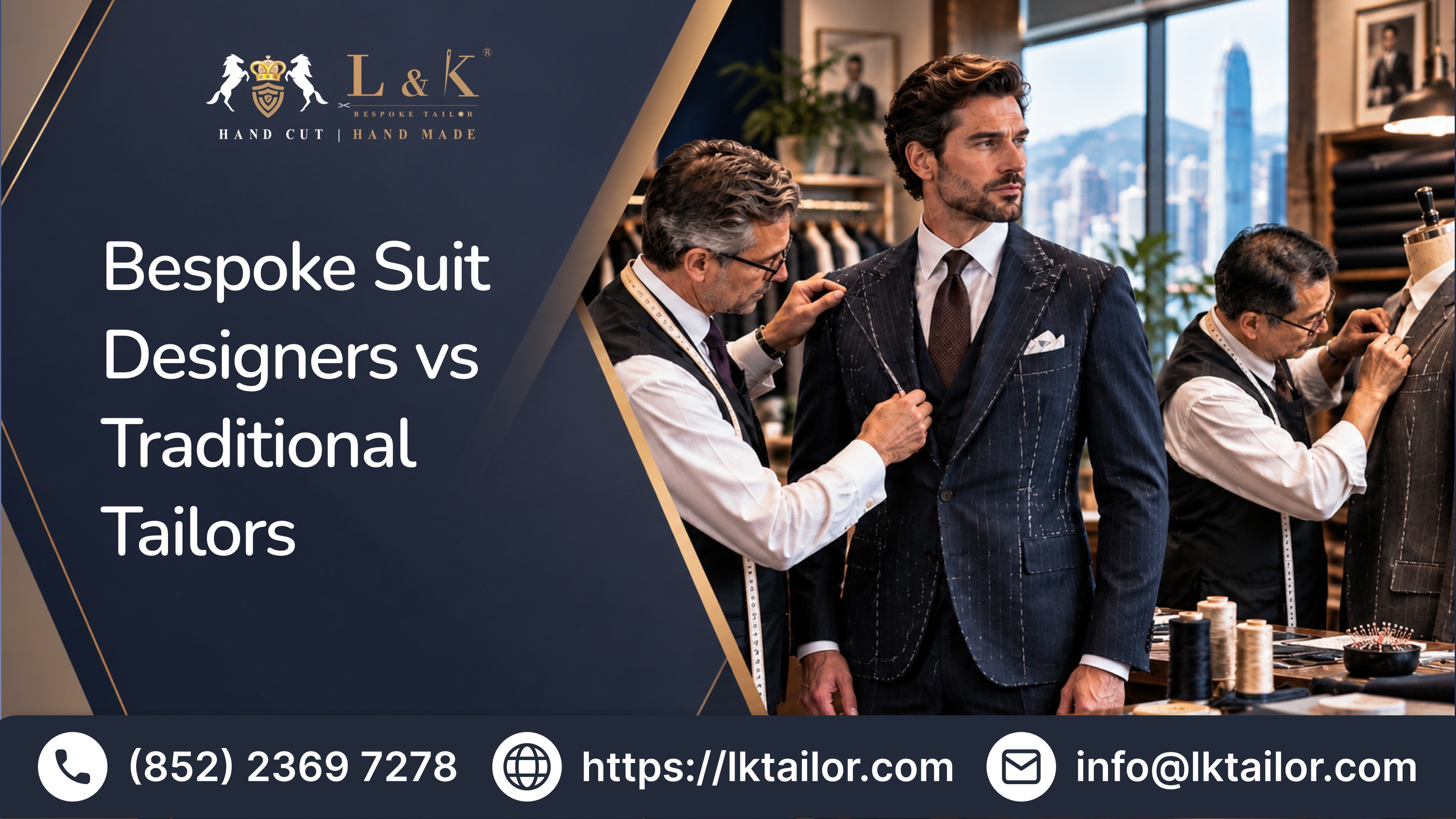
When looking for suit designers Hong Kong customers can work with, you may come across both bespoke suit designers and traditional tailors. Although these terms are sometimes used interchangeably, the approach to design, pattern making, measurements, fitting, and garment construction can differ.
A bespoke suit is not simply about choosing a fabric and having measurements taken. The process can involve custom measurements, individual pattern development, fabric selection, personalized styling, fittings, and detailed garment finishing. Traditional tailoring, meanwhile, places strong emphasis on established craftsmanship and traditional tailoring techniques.
Understanding these differences can help you decide what type of tailoring experience fits your style, wardrobe, and expectations.
What Is a Bespoke Suit Designer?
A bespoke suit designer combines tailoring knowledge with a strong focus on individual design and personalization. For customers searching for bespoke suit designers in Hong Kong, the experience typically involves discussing how the finished garment should look, feel, and function before construction begins.
Personalized Style and Design
A bespoke suit can be designed around your preferred:
- Lapel style
- Jacket proportions
- Trouser shape
- Button configuration
- Pocket design
- Lining
- Vent style
- Colors and patterns
The goal is to create a garment that reflects the customer’s preferences rather than simply selecting a standard size.
Custom Measurements and Fit
Custom measurements are an important part of creating a personalized suit. A tailor may consider measurements together with posture, shoulder position, body proportions, preferred fit, and the intended use of the garment. This can provide greater control over personal fit than standard ready-to-wear sizing.
Individual Pattern Development
Pattern making is another important part of bespoke tailoring. An individual pattern or custom pattern can be developed around the customer’s measurements and requirements. Pattern adjustments can then be made during the fitting stages to refine the proportions of the finished garment.
What Is a Traditional Tailor?
Traditional tailors Hong Kong customers visit often have a strong focus on established tailoring methods, craftsmanship, and construction techniques. Traditional tailoring can include hand cutting, pattern making, detailed fittings, and hand finishing. The exact process varies between individual tailors and tailoring houses.
Traditional Tailoring Techniques
Traditional tailoring techniques may include:
- Hand-cut tailoring
- Pattern making
- Hand finishing
- Basted fitting
- Fitting adjustments
- Structured suit construction
- Detailed garment finishing
These techniques can be combined with contemporary fabrics and modern styling depending on the tailor and customer’s requirements.
The Role of Tailoring Expertise
Experience matters because creating a tailored garment involves more than taking measurements.
A tailor needs to understand:
- Body proportions
- Fabric behavior
- Fabric drape
- Jacket construction
- Trouser construction
- Fitting adjustments
- Garment finishing
This combination of technical knowledge and tailoring expertise contributes to the overall tailoring experience.
Bespoke Suit Designers vs. Traditional Tailors
The difference between bespoke suit designers and traditional tailors is not always absolute. Many modern tailoring businesses combine traditional craftsmanship with contemporary design. However, there are several areas where you can compare the two approaches.
Design and Style Consultation
A designer-focused bespoke service may place considerable emphasis on developing the customer’s overall look.
This can include selecting:
- Lapel style
- Jacket proportions
- Button style
- Pocket configuration
- Trouser design
- Lining
- Color and pattern
Traditional tailors can also provide styling guidance, particularly when they have extensive experience creating suits for different occasions.
Measurements and Pattern Making
Both approaches can involve detailed custom measurements and pattern making. The main consideration is how much the pattern and garment are adapted to the individual. Ask whether the service involves an individual pattern, how measurements are recorded, and how adjustments are handled during fittings.
Fabric Selection
Fabric is another important part of the tailoring experience.
Customers looking for luxury bespoke suits in Hong Kong may encounter fabrics from internationally recognized mills, while other customers may prioritize durability, comfort, climate suitability, or budget.
Common options include:
- Wool
- Worsted wool
- Linen
- Cotton
- Cashmere blends
- Silk blends
The right fabric depends on factors such as climate, frequency of wear, business requirements, occasion, and preferred appearance.
Construction and Craftsmanship
Construction methods can vary considerably between garments. Canvas construction, for example, is one approach used to provide structure between the outer fabric and lining. Other construction methods may also be used depending on the garment and tailoring service.
Traditional tailoring may emphasize hand-cut tailoring, hand finishing, and established construction techniques. Rather than judging a suit by one construction term alone, consider the complete combination of fabric, construction, fitting, craftsmanship, and finishing.
Fittings and Adjustments
Fittings help refine the garment after the initial measurements and construction stages.
A basted fitting can allow a tailor to assess areas such as:
- Shoulder balance
- Jacket length
- Sleeve position
- Chest fit
- Waist shape
- Trouser proportions
Further fitting adjustments may then be made before the garment is completed.
Bespoke vs. Made-to-Measure Suits in Hong Kong
The terms bespoke and made-to-measure are sometimes confused, but they can describe different approaches. Made-to-measure suits Hong Kong services generally start with an existing base pattern that is adjusted according to the customer’s measurements.
Bespoke tailoring may involve greater individualization, including development of a pattern specifically around the customer.
The differences can involve:
| Feature | Bespoke | Made-to-Measure |
| Measurements | Individual | Individual |
| Base pattern | May be individually developed | Usually adapted |
| Customization | Extensive | Varies |
| Fittings | May involve multiple stages | Varies |
| Design options | Extensive | Depends on provider |
| Pattern development | Individual/custom | Adjusted base pattern |
The terminology and exact process can vary between tailoring businesses, so customers should ask what is included rather than relying only on the label.
What Can You Customize With a Bespoke Suit?
One reason customers choose custom suits Hong Kong services is the ability to personalize numerous elements of a garment. Depending on the tailoring service, customization can include:
Fabric
Choose a fabric based on climate, comfort, appearance, occasion, and frequency of wear.
Lapels
Options can include different widths and styles depending on the desired appearance.
Jacket Proportions
The jacket can be considered in relation to your body proportions and preferred silhouette.
Buttons and Lining
Buttons and lining provide opportunities to personalize the garment.
Pockets and Vents
Pocket placement and vent configuration can influence both appearance and function.
Trousers
Details such as waistband construction, pleats, cuffs, and trouser shape can be customized.
Monogramming
Some tailoring services also offer monogramming for an additional personalized detail. This level of personalization is one of the key differences between custom tailoring and standard ready-to-wear clothing.
How Does Fabric Choice Affect a Bespoke Suit?
Fabric selection affects the appearance, comfort, structure, and practical use of a suit. For example, wool is commonly used for suits because it can provide a balance of structure and comfort. Linen can be suitable for warmer-weather clothing, while cashmere blends can offer a different feel and appearance. Another consideration is fabric drape.
The way fabric hangs and moves can influence the appearance of:
- Jacket fronts
- Trousers
- Sleeves
- Shoulders
- Overall silhouette
When choosing fabric, consider your climate, lifestyle, business environment, occasion, and how frequently you expect to wear the garment.
Why Are Fittings Important in Bespoke Tailoring?
A suit can have accurate measurements and still require adjustments during construction. This is why fittings are an important part of bespoke craftsmanship. During a fitting, the tailor can assess how the garment sits on the body and identify areas that may need refinement.
This can include:
- Shoulder balance
- Chest fit
- Waist suppression
- Sleeve length
- Jacket length
- Trouser length
- Trouser waist
- Overall jacket proportions
A fitting stage provides an opportunity to refine the garment before garment finishing is completed.
Why Is Hong Kong Known for Bespoke Tailoring?
Hong Kong has a well-established tailoring industry serving both local customers and international visitors. The city’s tailoring businesses include services ranging from traditional tailoring to contemporary bespoke and made-to-measure approaches.
Customers searching for bespoke tailoring Hong Kong services can find options that combine:
- Traditional tailoring techniques
- Modern styling
- International fabrics
- Custom measurements
- Personalized fitting
- Detailed craftsmanship
The experience can differ from one tailoring business to another, so customers should understand the specific construction and fitting process offered by the tailor they choose.
What Types of Bespoke Clothing Can You Order in Hong Kong?
Bespoke tailoring is not limited to traditional business suits. Depending on the tailor, customers can order a range of tailored garments.
Bespoke Suits
Bespoke suits services can provide personalized business, formal, and occasionwear suits based on individual measurements and styling preferences.
Bespoke Shirts
Bespoke Shirts can be customized through collar styles, cuffs, fabrics, fit, monograms, and other details.
Tuxedos
Bespoke tuxedos can be designed for weddings, black-tie events, formal occasions, and eveningwear.
Tailored Jackets and Blazers
A custom jacket or blazer can provide an alternative to a complete suit and can be designed for business or smart-casual wardrobes.
Women’s Bespoke Suits
Bespoke tailoring also extends to women’s clothing, including business suits and other tailored garments.
Tailored Trousers and Topcoats
Trousers and topcoats can also be customized around individual measurements, fabric preferences, and intended use.
Why Choose L&K Bespoke Tailor in Hong Kong?
L&K Bespoke Tailor offers personalized tailoring for customers looking for custom suit designers Hong Kong and bespoke clothing services. Its tailoring approach includes individual measurements, fabric selection, styling consultation, and fittings. L&K also highlights hand-cut and hand-made tailoring and offers a range of tailored garments.
The available options include:
- Bespoke suits
- Bespoke shirts
- Jackets
- Tuxedos
- Trousers
- Topcoats
- Women’s bespoke suits
For customers comparing suit designers Hong Kong services, understanding the actual process is important. Consider the measurements, pattern development, fabric options, construction, fittings, and customization available before ordering.
Frequently Asked Questions
What is the difference between a bespoke suit designer and a traditional tailor?
A bespoke suit designer may place greater emphasis on individual design and styling, while a traditional tailor may emphasize established tailoring and construction techniques. Many modern tailoring businesses combine both approaches.
Are bespoke suits different from made-to-measure suits?
They can be. Made-to-measure generally involves adjusting an existing pattern to individual measurements, while bespoke tailoring may involve greater individual pattern development and customization. Processes vary between tailoring businesses.
What does a bespoke suit include?
A bespoke suit can include individual measurements, fabric selection, personalized styling, pattern development, fittings, construction, alterations, and finishing, depending on the tailoring service.
How are custom measurements taken?
A tailor may consider measurements such as chest, waist, shoulder, sleeve, jacket and trouser dimensions together with posture and body proportions.
What is an individual suit pattern?
An individual suit pattern is developed or significantly adapted around a customer’s measurements and requirements rather than relying entirely on standard sizing.
What is a basted fitting?
A basted fitting is an intermediate fitting stage that allows the tailor to assess the developing garment and identify adjustments before final completion.
How many fittings are needed for a bespoke suit?
The number of fittings varies according to the tailor, garment, construction method, and customer’s requirements. Ask the tailoring service about its specific fitting process.
Can I choose my own fabric and suit design?
Many bespoke and custom tailoring services offer fabric and design choices. Options can vary, so discuss available fabrics, lapels, buttons, lining, pockets, and trouser styles during your consultation.
How do I find suit designers in Hong Kong?
Look for a tailoring service that clearly explains its measurements, pattern making, fabric selection, construction, fitting process, and customization options. Reviewing the actual tailoring process can be more useful than comparing labels alone.
Find a Bespoke Suit Designer in Hong Kong
Finding the right tailoring service involves more than comparing the words “designer” and “tailor.” Consider the complete process, including custom measurements, pattern making, fabric selection, construction, fittings, and personalized styling.
If you are looking for suit designers Hong Kong customers can work with for personalized tailoring, L&K Bespoke Tailor offers bespoke suits, shirts, jackets, tuxedos, trousers, topcoats, and women’s tailored garments. Explore L&K’s bespoke suits and discuss your preferred fabric, style, fit, and tailoring requirements for your next custom garment.