
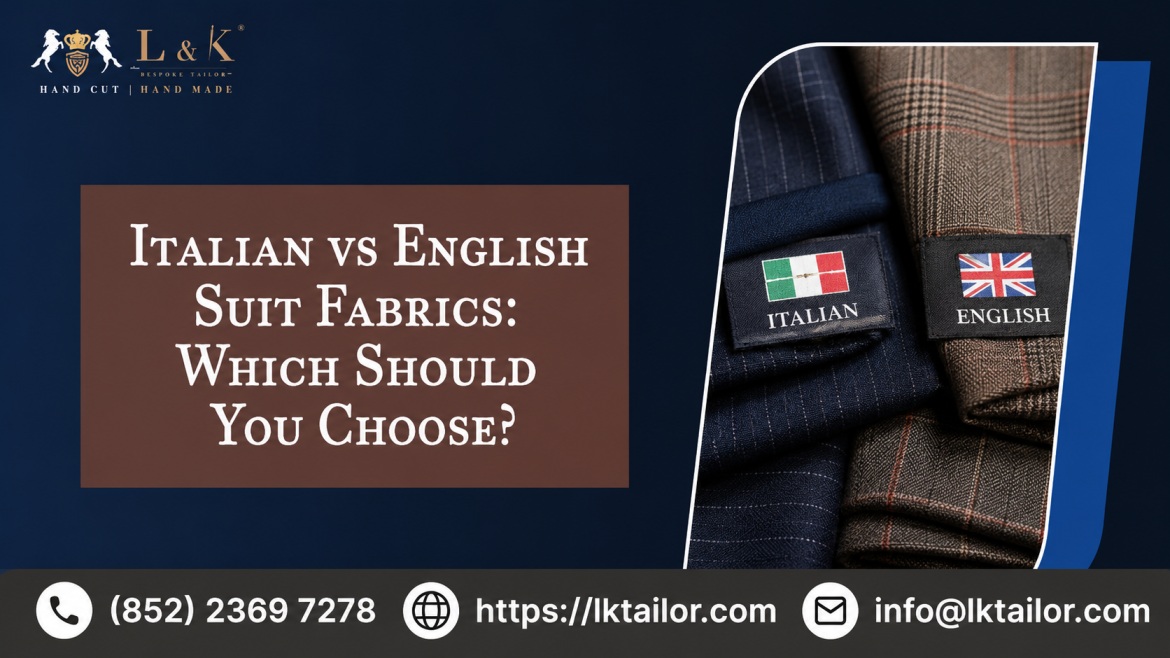
If you’ve ever stood in a tailor’s showroom in Hong Kong, running your fingers over bolt after bolt of wool, you’ve probably felt the difference before anyone explained it to you. Italian fabrics feel soft, almost liquid, and drape close to the body. English fabrics feel firmer, drier, built to hold a shape. Choosing between them isn’t just about taste in a city as hot and humid as Hong Kong, it’s a decision that affects how comfortable, and how sharp, your suit actually looks after an hour outside. This guide breaks down the real differences between Italian suit Hong Kong tailoring and English suiting, and which one makes more sense for our climate.
What Is the Difference Between Italian and English Suit Fabric?
The core difference between Italian and English suit fabric comes down to weight, twist, and finishing. Italian fabric suits Hong Kong tailors work with tend to be lighter, made with a higher twist yarn that gives the cloth a soft hand and a fluid drape close to the body. English wool suit fabric, by contrast, is typically heavier and more densely woven, designed for structure, durability, and a crisper silhouette that holds its shape through decades of wear.
This isn’t just a manufacturing quirk it reflects two different tailoring philosophies:
- Italian fabrics: softer hand-feel, lighter construction (often 230–280gsm), close, body-skimming drape, less internal structure in the jacket
- English fabrics: heavier weight (often 280–380gsm), tighter weave, built for formality and long-term durability, holds a firmer shape even without much canvassing
Neither is objectively “better” ; they’re built for different climates, different silhouettes, and different ideas of what a suit should do for the body.
Italian vs British Tailoring Style: Shoulder, Silhouette & Drape
The fabric you choose doesn’t just affect comfort it dictates the entire silhouette a tailor can build. This is where Italian vs British tailoring style becomes most visible.
Italian tailoring leans into the softness of the cloth itself. Jackets are often cut with a soft, barely-padded shoulder, minimal canvassing, and a shorter, closer-fitting body. The fabric is doing the work draping naturally rather than being held into shape by internal structure. It’s the difference between a jacket that moves with you and one that holds its form regardless of what your body is doing underneath.
British tailoring goes the other way. English cloth is heavy and stiff enough to support a structured shoulder vs soft shoulder build padded, roped, or built up with a fuller chest and a more architectural silhouette. The drape is more formal, less body-hugging, designed to project authority rather than ease.
If you already know which silhouette you prefer, that alone can narrow your fabric choice before climate even enters the conversation.
Worsted Wool, Fresco & Flannel Understanding the Weave
Before comparing climates and mills, it helps to understand what you’re actually buying. Most suiting fabric falls into a few core weave categories:
- Worsted wool – the most common suiting fabric, made from long, combed fibers spun into a smooth, tightly twisted yarn. It’s what gives suits that clean, slightly lustrous finish.
- Fresco wool – a high-twist, open-weave worsted, specifically engineered for breathability. It feels almost papery to the touch but performs exceptionally in heat.
- Flannel fabric – a softer, brushed finish with a slight nap, warm and cozy, but generally a poor match for humid climates.
The other number worth understanding is fabric weight (grams per meter), or gsm. Lower gsm (200–260) generally means a lighter, more breathable cloth suited to warm climates; higher gsm (300+) means more structure, more warmth, and more durability better suited to cooler regions or heavier daily wear.
Best Suit Fabric for Hong Kong’s Humid Climate
This is really the question that matters most if you live and work here. Hong Kong’s combination of heat and near-constant humidity puts real limits on which fabrics actually perform, regardless of how good they look on the bolt.
For Hong Kong’s climate, a lightweight, high-twist wool generally in the Super 130s to Super 150s range, around 220–260gsm tends to perform best, offering breathability without sacrificing too much structure.
Lightweight suit fabric Hong Kong tailors reach for most often falls into a few categories:
- Tropical wool – an open, high-twist worsted weave designed specifically for heat and humidity, second only to fresco in breathability
- Fresco wool – arguably the single best-performing weave for Hong Kong’s climate, thanks to its extremely open, breathable structure
- Super 150s wool suit fabric – prized for its exceptional softness and smooth hand-feel, but worth a caveat: the finer the fiber, the less durable the cloth tends to be. Super 150s+ wool can pill, wear thin, and lose its shape faster in high-humidity, high-wear conditions than a coarser, more robust weave.
If you want one fabric that works across Hong Kong’s full range of conditions from air-conditioned offices to humid, 30°C afternoons a four-season fabric (typically a mid-weight, high-twist wool around 260–280gsm) is often the most practical middle ground. It won’t be as breathable as pure fresco on the hottest days, but it holds up better across a wider range of temperatures and use cases, making it a smart single-suit investment.
| Italian | English | |
| Hand-feel | Soft, silky | Firmer, drier |
| Construction | Light, minimal structure | Padded, structured |
| Best for | Warm, humid climates; soft silhouette | Cooler climates; formal, durable wear |
| Typical weave | High-twist, fresco, tropical wool | Worsted flannel, heavier worsted |
| Durability | Lower, especially at Super 150s+ | Higher |
Fabric Mills Worth Knowing: Loro Piana, Zegna, Holland & Sherry
Once you’ve settled on a weight and weave, the mill behind the cloth matters almost as much. Here’s a quick fabric mills comparison of the three names you’ll hear most often in any good Hong Kong tailor shop.
Loro Piana is the benchmark for luxury softness. A Loro Piana fabric suit typically uses some of the finest, highest-grade wool available, prized for an exceptionally smooth, almost weightless hand-feel ideal if softness and comfort are your top priority.
Ermenegildo Zegna represents Italian innovation. Zegna has spent decades developing high-performance wool blends and finishes including options engineered specifically for heat and travel making it a strong choice for anyone who wants Italian softness with a bit more built-in resilience.
Holland & Sherry carries English heritage. Known for classic worsted wools, flannels, and tweeds with exceptional depth and durability, it’s the natural choice for anyone leaning toward a structured, long-lasting English silhouette.
Mohair Blends A Middle Ground Worth Considering
If neither pure Italian softness nor pure English structure feels quite right, a mohair blend is worth a look. Blending wool with mohair adds a natural sheen, crisp resilience, and crucially for Hong Kong excellent breathability and wrinkle resistance, without sacrificing durability the way an ultra-fine Super 150s+ wool might. It’s a popular choice for suits that need to look sharp through a long, humid day.
Italian or English Which Should You Choose?
So, which suit fabric is better Italian or English? Honestly, it depends on your climate, your silhouette preference, and how the suit fits into your life.
Choose Italian if:
- You live or work primarily in a hot, humid climate like Hong Kong
- You prefer a softer, closer, more relaxed silhouette
- Comfort and breathability matter more to you than maximum longevity
Choose English if:
- You prioritize durability and want a suit that lasts many years of regular wear
- You prefer a structured, formal silhouette with a stronger shoulder line
- You spend significant time in air-conditioned environments or cooler climates
Is Italian wool better than English wool? Not universally but for most people living in Hong Kong, an Italian suit Hong Kong tailoring approach, built around lightweight, high-twist wool, is simply better matched to the climate you’re actually wearing it in. If you’re unsure which direction suits your lifestyle, a good tailor can walk you through fabric swatches in person and help you feel the difference for yourself.
FAQ
What is the difference between Italian and English suit fabric?
Italian suit fabric is generally lighter and softer, with a high-twist weave that drapes close to the body. English suit fabric is heavier and more tightly woven, built for structure, formality, and long-term durability.
Which suit fabric is better for Hong Kong’s climate: Italian or English?
Italian fabric, particularly lightweight, high-twist weaves like fresco or tropical wool, generally performs better in Hong Kong’s heat and humidity than heavier English worsted or flannel cloths.
Is Italian wool better than English wool?
Neither is universally “better” Italian wool suits warm, humid climates and softer silhouettes, while English wool suits cooler climates and structured, long-lasting tailoring. The right choice depends on where and how often you’ll wear the suit.
What makes Italian suit fabric different?
Italian suit fabric is typically made with a higher twist yarn and lighter weight, giving it a softer hand-feel and a more fluid drape than the heavier, denser weaves common in English suiting.
Ready to find the fabric that actually works for Hong Kong’s climate? Book a consultation with our tailors and feel the difference between Italian and English cloth for yourself. We’ll help you choose the weight, weave, and mill that fits both your silhouette and your lifestyle.